

How Does a LiFePO4 Battery System Work
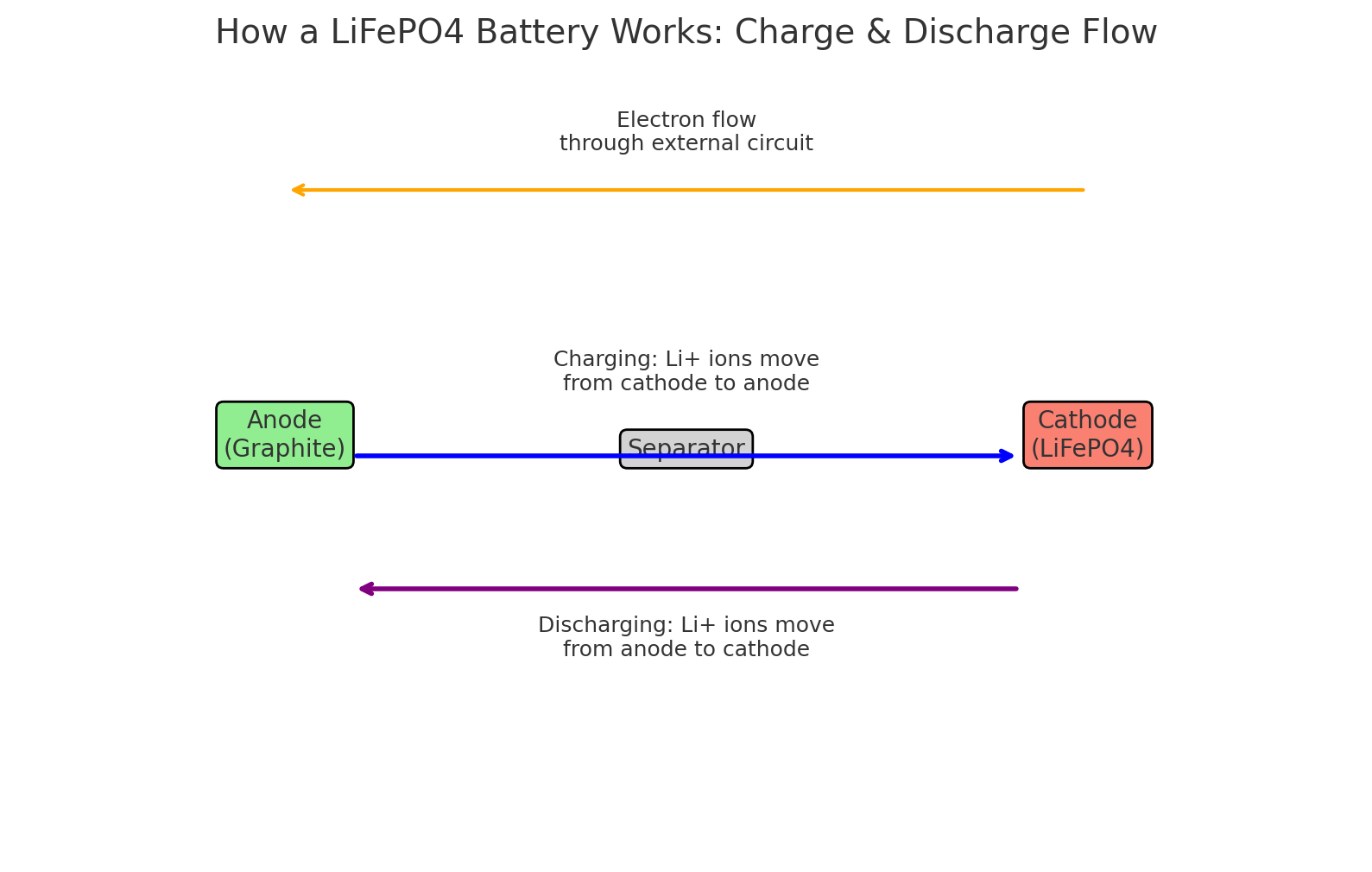
A LiFePO4 battery, or Lithium Iron Phosphate battery, is a rechargeable lithium-ion battery that uses lithium iron phosphate as the cathode material and graphite as the anode. Known for its long cycle life and superior thermal and chemical stability, it has become a preferred choice in applications that demand reliable and safe energy storage.
Unlike traditional lithium-ion batteries that use cobalt-based chemistries, LiFePO4 batteries are non-toxic, have a longer operational lifespan, and are much less prone to overheating or catching fire. These characteristics make them highly suitable for renewable energy storage, electric vehicles, marine power, and off-grid systems.
Additionally, LiFePO4 batteries provide a steady voltage throughout the discharge cycle, which ensures efficient and consistent energy delivery. They are widely recognized for their low maintenance, high charge and discharge efficiency, and resistance to environmental extremes. These qualities help reduce operational costs and increase the overall safety and performance of energy systems where they are deployed.
A LiFePO4 battery is a type of lithium-ion battery that uses lithium iron phosphate (LiFePO4) as the cathode material and graphite as the anode. It stands out for its superior thermal and chemical stability, long cycle life, and high safety performance.
LiFePO4 batteries are often used in solar battery systems, off-grid power setups, electric vehicles, and backup power solutions due to their durability and low maintenance needs.
Core Components of a LiFePO4 Battery System
- Battery Cells
Battery cells are the energy core of the system. Each cell contains lithium iron phosphate as the cathode material and graphite as the anode. These cells are arranged in series and parallel configurations to achieve desired voltage and capacity. Their chemistry ensures stable operation, long life, and resistance to overheating.
- Battery Management System (BMS)
The Battery Management System is a crucial component that ensures the battery operates safely and efficiently. It regulates the voltage of individual cells, manages charging and discharging cycles, protects against overcurrent, and provides temperature control. Modern BMS units also support remote monitoring and diagnostics through Bluetooth or Wi-Fi.
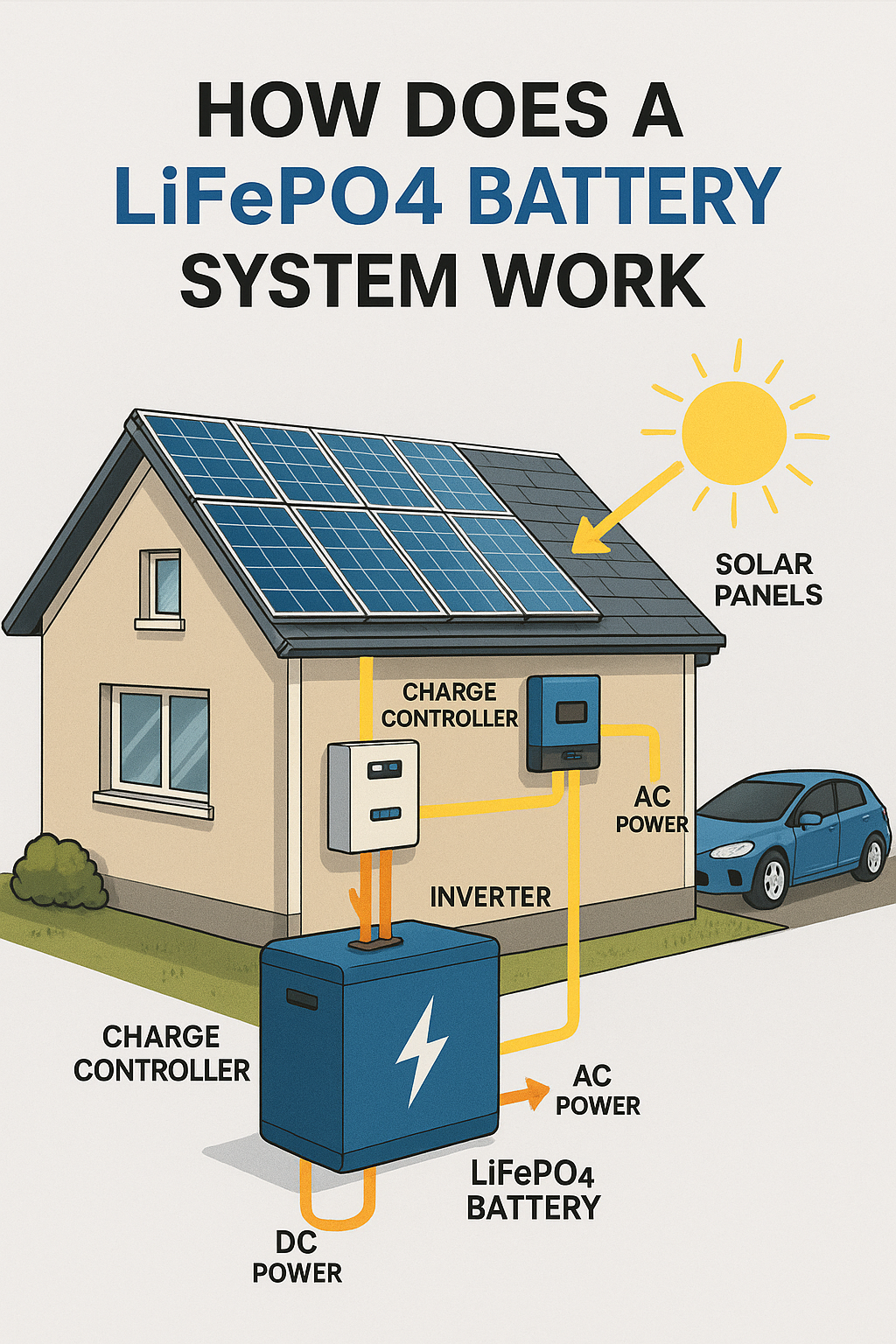
- Inverter or Charger Controller (in Solar Setups)
In solar-powered systems, the inverter or charger controller plays a dual role. It manages energy flow from the solar array to the battery bank and converts stored DC electricity into AC power for appliances. Smart inverters also allow for programmable load control, time-of-use optimization, and hybrid grid interaction.
- Battery Enclosure and Wiring
A durable enclosure protects the battery cells and internal electronics from physical damage, moisture, and dust. It includes integrated wiring, safety fuses, terminals, and sometimes ventilation fans. Modular enclosures allow for stacking or wall-mounting, making installation flexible and space-efficient.