

How to Maximize LiFePO4 Battery Life?
How to Maximize LiFePO4 Battery Life?
Lithium Iron Phosphate (LiFePO4) batteries have become increasingly popular due to their safety, long lifespan, and stability. Whether used in solar energy storage, electric vehicles, or portable devices, these batteries offer numerous advantages over traditional battery chemistries. However, to get the most out of your LiFePO4 battery, it’s essential to understand how to properly care for and maintain it. In this comprehensive guide, we’ll explore How to Maximize LiFePO4 Battery Life? We’ll cover best practices, common pitfalls, and expert tips to ensure your LiFePO4 battery delivers optimal performance for years to come.
When investing in energy storage, understanding battery life is crucial. Whether used in solar power systems, electric vehicles, or backup power solutions, LiFePO4 batteries offer durability, efficiency, and long-term performance. But how long do lithium batteries last? The lithium battery lifespan varies depending on usage, maintenance, and environmental factors.
By following best practices, you can significantly extend the lifespan of lithium-ion batteries, ensuring reliable power for years. This guide will explore ways to maximize battery life, prevent premature wear, and optimize performance
Why Maximizing LiFePO4 Battery Life is Important
Maximizing LiFePO4 Battery Life is not just about extending the time between replacements; it also enhances the overall efficiency and cost-effectiveness of your energy system. By following best practices, you can ensure that your battery performs at its peak for as long as possible, reducing maintenance costs and minimizing environmental impact.
Understanding LiFePO4 Battery Chemistry
Lithium iron phosphate (LiFePO4) is one of the most stable and efficient battery chemistries. Unlike conventional lithium-ion batteries, LiFePO4 cells offer longer cycle life, improved thermal stability, and enhanced safety. These qualities make them ideal for renewable energy storage, marine applications, and off-grid power solutions.
Key Advantages of LiFePO4 Batteries:
- Longer Cycle Life – LiFePO4 batteries can last over 66,000-10,000 cycles, far exceeding standard lithium-ion batteries.
- Better Thermal Stability – Lower risk of overheating and thermal runaway.
- Higher Efficiency – More consistent power delivery with minimal energy loss.
- Eco-Friendly Composition – Free of cobalt and toxic heavy metals.
- Fast Charging Capability – LiFePO4 batteries charge faster than traditional lead-acid alternatives, enhancing efficiency.
- Lightweight Design – Compared to lead-acid batteries, LiFePO4 options are much lighter, making them easier to install and transport.
Understanding these benefits will help you take the right steps to maximize battery life and optimize performance.
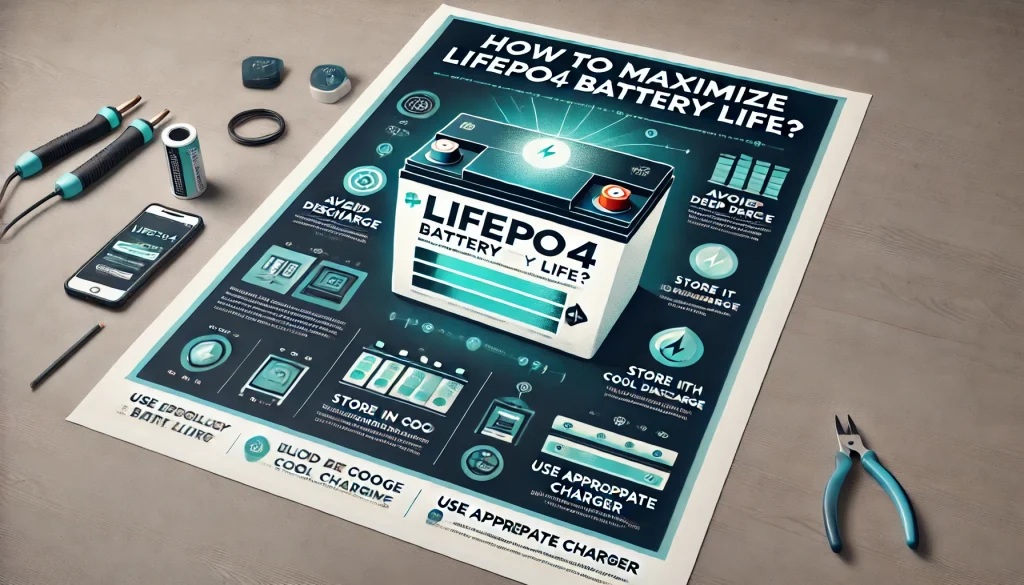
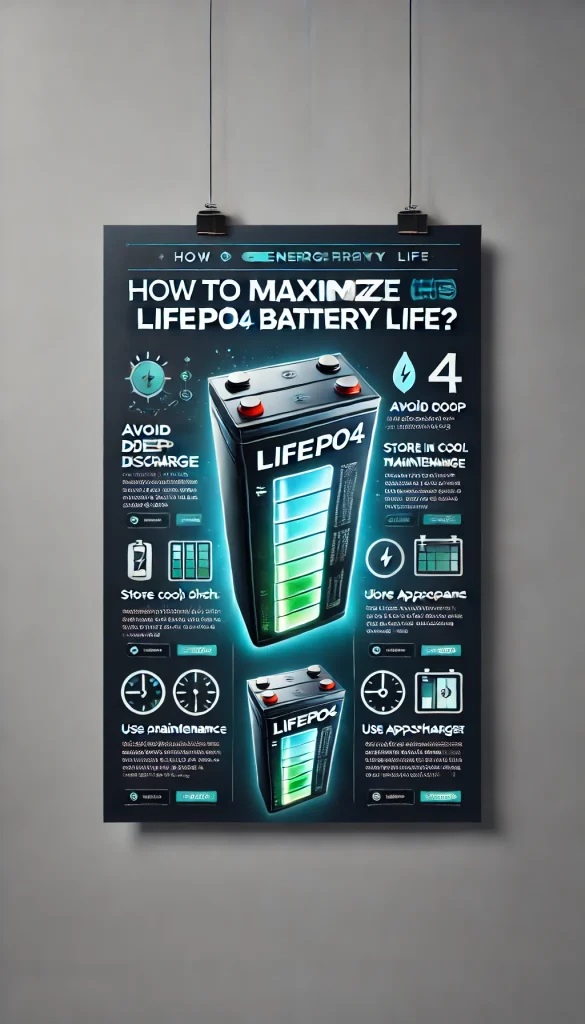
Maximizing the lifespan of your LiFePO4 Battery involves a combination of proper usage, regular maintenance, and understanding the factors that can affect battery life. Here are some detailed tips on how to Maximize LiFePO4 Battery Life:
1. Avoid Deep Discharges
One of the most effective ways to Maximize LiFePO4 Battery Life is to avoid deep discharges. While LiFePO4 batteries are more tolerant of deep discharges than other battery types, consistently draining the battery to very low levels can shorten its lifespan.
- Recommendation: Try to keep the battery’s state of charge (SoC) between 20% and 80% for regular use. Occasional full discharges won’t significantly harm the battery, but they should be avoided as a daily practice.
2. Charge at Appropriate Rates
Charging your LiFePO4 battery at the correct rate is crucial for longevity. Overcharging or using a charger that exceeds the recommended voltage can lead to overheating and damage the battery’s cells.
- Recommendation: Use a charger specifically designed for LiFePO4 batteries. These chargers are calibrated to the battery’s voltage requirements, ensuring safe and efficient charging. Avoid fast chargers unless necessary, as they can generate excess heat and stress the battery.
3. Maintain Proper Temperature Conditions
Temperature has a significant impact on LiFePO4 Battery Life. Extreme temperatures, whether hot or cold, can degrade the battery’s performance and shorten its lifespan.
- Recommendation: Store and use the battery in a temperature-controlled environment. The ideal temperature range for LiFePO4 batteries is between 20°C and 25°C (68°F to 77°F). Avoid exposing the battery to temperatures above 60°C (140°F) or below 0°C (32°F) for extended periods.
4. Implement a Battery Management System (BMS)
A Battery Management System (BMS) is essential for monitoring and managing the health of your LiFePO4 battery. The BMS helps prevent overcharging, over-discharging, and temperature extremes, all of which can significantly impact battery life.
- Recommendation: Ensure that your battery setup includes a high-quality BMS tailored to LiFePO4 technology. The BMS should be regularly monitored to ensure it’s functioning correctly and protecting the battery.
5. Regular Maintenance and Inspections
Even though LiFePO4 batteries require less maintenance than lead-acid batteries, regular inspections are still important for ensuring long life and optimal performance.
- Recommendation: Periodically check the battery for any signs of physical damage, corrosion, or loose connections. Clean any dirt or debris from the battery terminals and ensure that the connections are tight. Regularly check the battery’s voltage and SoC to monitor its health.
6. Use the Battery Consistently
LiFePO4 batteries perform best when they are regularly cycled, meaning charged and discharged. Batteries that sit unused for long periods can suffer from capacity loss, a phenomenon known as “calendar aging.”
- Recommendation: If your battery is part of a solar energy storage system or another application with intermittent use, try to use it consistently. If the battery is not in regular use, perform a full charge and discharge cycle every few months to keep the cells active.
7. Store the Battery Properly When Not in Use
If you need to store your LiFePO4 battery for an extended period, proper storage conditions are crucial for preserving LiFePO4 Battery Life.
- Recommendation: Store the battery in a cool, dry place with a SoC of around 50-70%. This state of charge minimizes stress on the battery cells. Avoid storing the battery fully charged or fully discharged, as both extremes can negatively impact its lifespan.
8. Monitor Depth of Discharge (DoD)
Depth of Discharge (DoD) refers to how much of the battery’s capacity has been used. The deeper the discharge, the shorter the battery life.
- Recommendation: To Maximize LiFePO4 Battery Life, keep the DoD moderate, around 50% or less for regular cycling. Higher DoD is acceptable in emergencies but should not be a frequent practice.
9. Avoid Overcharging
Overcharging a LiFePO4 battery can lead to excessive heat buildup and potentially damage the battery. Overcharging also stresses the battery’s cells, leading to reduced lifespan.
- Recommendation: Use a charger with overcharge protection features, or set up your charging system to cut off charging when the battery reaches 100% SoC. A good BMS will also help prevent overcharging by managing the voltage levels.
10. Balance the Cells Regularly
Cell balancing ensures that all cells within the battery are at the same voltage level. Imbalanced cells can lead to reduced performance and a shorter lifespan for the battery.
- Recommendation: Ensure your BMS has cell balancing features, or manually balance the cells periodically if needed. This can be particularly important in battery banks where multiple LiFePO4 batteries are connected in series or parallel.
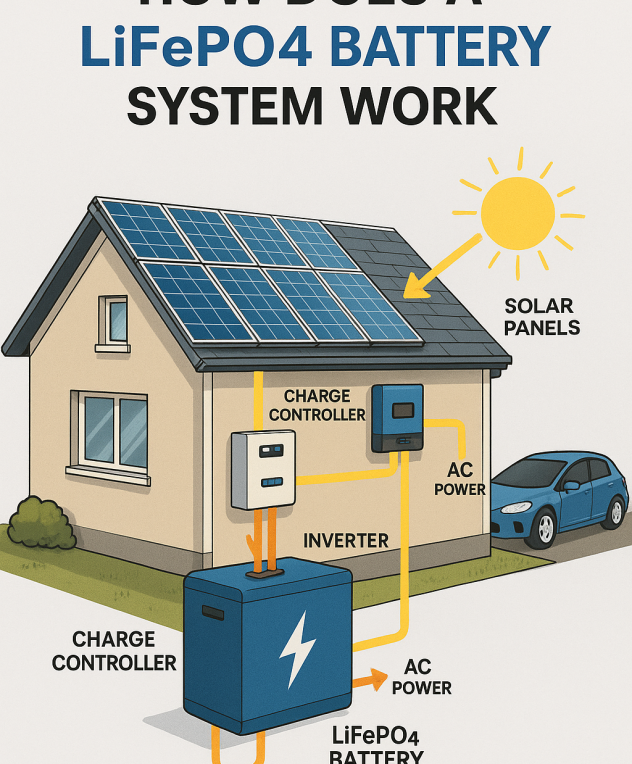
To Maximize LiFePO4 Battery Life in a solar energy system:
- Optimize Charging Cycles: Use the solar energy to charge the battery during peak sunlight hours and avoid overcharging by using a solar charge controller.
- Monitor Temperature: Solar installations can experience temperature fluctuations, so ensure that the battery is kept within its optimal temperature range.
- Regularly Update Firmware: If your BMS or solar inverter has firmware updates, ensure they are applied to take advantage of the latest features and protections.

How Long Do Lithium Batteries Last?
A common question among battery users is: How long do lithium batteries last? The answer depends on the battery type, charging habits, and overall care.
For LiFePO4 batteries, the lithium battery lifespan typically ranges from 10 to 15 years, depending on usage patterns and environmental factors. Unlike lead-acid batteries, which degrade quickly, LiFePO4 cells maintain a stable charge cycle, making them a long-term investment.
Factors That Affect Lithium Battery Lifespan:
- Charge and Discharge Cycles – More cycles lead to gradual capacity loss.
- Depth of Discharge (DoD) – Deeper discharges reduce longevity.
- Temperature Exposure – Extreme heat or cold accelerates battery degradation.
- Storage Conditions – Proper storage prevents self-discharge and capacity loss.
- Charging Voltage & Current – Overcharging or using incorrect chargers damages cells.
- Usage Frequency – Batteries that sit unused for extended periods may degrade faster than those used regularly.
By managing these factors, you can significantly extend the lifespan of lithium-ion batteries and maintain optimal performance.
Tips to Maximize Battery Life
Extending the life of your LiFePO4 battery requires careful attention to charging, discharging, and storage practices. Here’s how to maximize battery life effectively:
- Avoid Deep Discharges
- Keeping a LiFePO4 battery above 20% state of charge (SoC) helps prolong its lifespan.
- Fully discharging a battery frequently shortens its cycle life.
- Implementing an automatic cutoff system prevents excessive depletion.
- Charge Properly
- Use a LiFePO4-compatible charger to prevent overvoltage damage.
- Charge to 80-90% capacity instead of 100% for extended longevity.
- Avoid rapid charging unless necessary, as it generates excess heat.
- Implement slow charging methods when possible to extend battery life.
- Maintain Optimal Temperature Conditions
- Store and operate LiFePO4 batteries between 15°C and 35°C (59°F – 95°F).
- Avoid exposing the battery to extreme cold or high heat, which accelerates degradation.
- For outdoor applications, install thermal management systems.
- Consider insulated battery enclosures for extreme environments.
- Store Batteries Correctly
- When not in use, store batteries at a 40-60% charge level.
- Keep them in a cool, dry location, away from direct sunlight or moisture.
- Avoid long-term storage at full charge or completely empty, as both can shorten battery lifespan.
- Regularly check stored batteries for voltage levels and recharge when necessary.
- Monitor and Balance Battery Cells
- Using a Battery Management System (BMS) prevents overcharging and deep discharges.
- Regularly check for voltage imbalances between cells.
- Periodic maintenance helps ensure even energy distribution.
- Perform capacity testing to monitor performance over time.
The Role of Depth of Discharge (DoD) in Maximizing Battery Life
Depth of Discharge (DoD) refers to how much capacity is used before recharging. Lower DoD levels can significantly extend the lifespan of lithium-ion batteries.
| Depth of Discharge | Estimated Cycle Life |
|---|---|
| 100% (Full Discharge) | 2,000 cycles |
| 80% | 3,500 cycles |
| 50% | 5,000+ cycles |
| 20% | 7,000+ cycles |
For maximum longevity, it’s best to keep DoD at or below 50%, ensuring battery life remains optimal over the years.
Future Innovations in LiFePO4 Battery Longevity
As battery technology advances, researchers are developing ways to further maximize battery life and increase efficiency. Some exciting innovations include:
- Graphene-enhanced electrodes for improved conductivity and cycle life.
- AI-powered battery management systems to optimize charge cycles.
- Self-healing battery materials that extend lifespan.
- Advanced thermal regulation to prevent overheating in extreme conditions.
- Wireless energy transfer technology to reduce wear on connectors and contacts.
- Smart charging algorithms that adapt charging rates based on battery health.
These advancements will continue improving the lifespan of lithium-ion batteries, making them even more reliable for future applications.
Conclusion: How to Maximize LiFePO4 Battery Life
Extending battery life requires proper charging habits, temperature management, and avoiding deep discharges. By following best practices, you can ensure that your LiFePO4 battery lasts well beyond its expected cycle life.
To summarize:
Charge within safe voltage limits. Keep DoD below 50% whenever possible. Store batteries at moderate temperatures Use a Battery Management System (BMS). Monitor battery health and performance regularly Implement energy-efficient usage practices
By taking these steps, you can significantly maximize battery life, ensuring years of reliable, high-performance energy storage. Whether for solar power, electric vehicles.