A BMS for lithium-ion battery applications operates by continuously monitoring the battery pack’s parameters and making real-time adjustments to ensure safety and efficiency.
Step-by-Step Process of How a Battery BMS Works:
- Voltage Monitoring – Measures individual cell voltage and prevents overcharging.
- Current Regulation – Controls power input/output to maintain stability.
- Temperature Control – Detects temperature fluctuations and prevents overheating.
- Cell Balancing – Transfers charge between cells to maintain equal voltage levels.
- Failure Detection – Identifies faulty cells and prevents dangerous conditions.
These mechanisms make BMS for lithium battery solutions indispensable for energy storage and electric power applications.
Types of Battery BMS and Their Applications
There are different types of battery BMS systems designed for various battery applications. Choosing the right type ensures efficient performance and maximum safety.
- Passive BMS
- How It Works: Uses resistors to discharge excess energy from fully charged cells.
- Best For: Low-power applications like small battery packs and consumer electronics.
- Active BMS
- How It Works: Actively redistributes charge between cells to improve efficiency.
- Best For: Large energy storage systems, electric vehicles, and renewable energy applications.
- Centralized BMS
- How It Works: Uses a single control unit to monitor all battery cells.
- Best For: Industrial applications, large-scale battery storage systems.
- Distributed BMS
- How It Works: Each battery module has an independent BMS unit for improved control.
- Best For: Modular energy storage solutions and scalable battery systems.
Choosing the appropriate BMS for lithium-ion battery applications depends on factors such as battery size, usage environment, and required safety features.
BMS for Lithium Battery in Solar Energy Systems
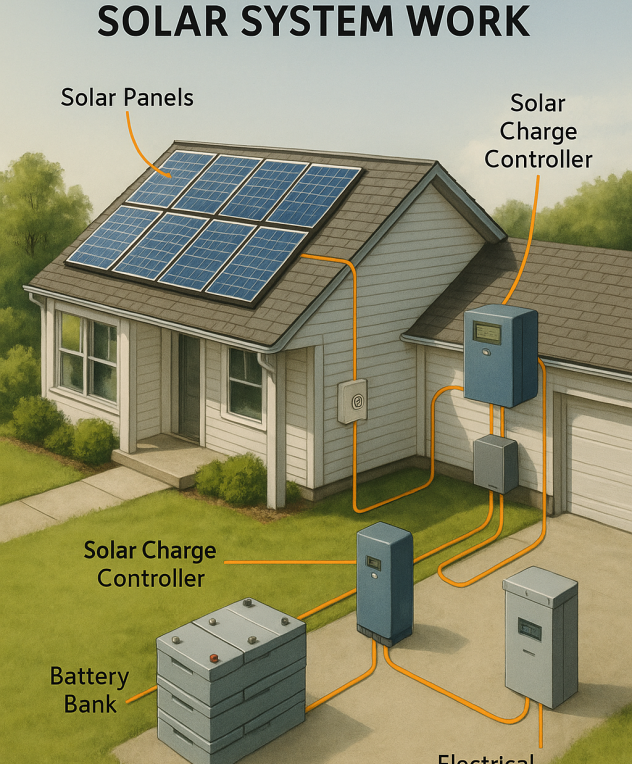
In solar energy applications, a BMS for lithium battery ensures that LiFePO4 solar batteries operate safely and efficiently.
Benefits of Using a Battery BMS in Solar Power Systems:
- Prevents Overcharging: Solar panels can generate fluctuating power levels; a BMS prevents excessive charging.
- Improves Battery Efficiency: Ensures consistent power output for longer battery life.
- Protects Against Extreme Temperatures: Regulates battery performance in hot and cold environments.
- Enhances Energy Storage Stability: Balances battery cells for optimal solar energy utilization.
For off-grid solar setups and home battery backups, a reliable battery BMS is critical for long-term energy storage performance.
Common Issues in Battery BMS and How to Solve Them
Even high-quality LiFePO4 battery BMS systems can encounter problems. Identifying and resolving these issues early ensures continued battery efficiency and safety.
- Overvoltage Alerts
- Cause: Charger exceeding recommended voltage limits.
- Solution: Use a compatible charger and check voltage settings.
- Battery Cell Imbalance
- Cause: Uneven charge distribution among cells.
- Solution: Use a BMS for lithium-ion battery with active balancing features.
- Temperature Fluctuations
- Cause: High environmental temperatures or internal heat buildup.
- Solution: Ensure proper ventilation and avoid extreme weather conditions.
- Inconsistent Power Output
- Cause: Faulty connections or degraded battery cells.
- Solution: Perform regular maintenance and replace aging battery modules.
Understanding these common issues can help users select the right BMS for lithium battery applications and maintain long-term performance.
Future of Battery BMS Technology
With advancements in battery technology, the future of battery BMS is evolving towards greater efficiency and intelligence. Emerging trends include:
- AI-Integrated BMS: Predicts battery performance using machine learning algorithms.
- Wireless BMS Solutions: Reduces wiring complexity and improves battery pack scalability.
- Smart Grid Integration: Enables automated energy management in solar and grid systems.
- Higher Energy Density Batteries: Requires more advanced BMS solutions to handle increased capacity.
These innovations will further improve the efficiency and reliability of BMS for lithium battery solutions across multiple industries.
Choosing the Right BMS for LiFePO4 Batteries
A LiFePO4 battery BMS is essential for maximizing battery life, enhancing safety, and ensuring optimal performance in lithium-based energy storage solutions. Whether used in solar power systems, electric vehicles, or industrial applications, a high-quality BMS for lithium-ion battery applications is necessary for long-term efficiency.
To choose the best battery BMS, consider: Voltage and Current Requirements. Battery Capacity and Configuration. Safety Features like Overvoltage and Overcurrent Protection. Smart Monitoring Capabilities. Compatibility with LiFePO4 and Other Lithium Chemistries
Investing in the right BMS for lithium battery solutions will help ensure safe and efficient energy storage for years to come.