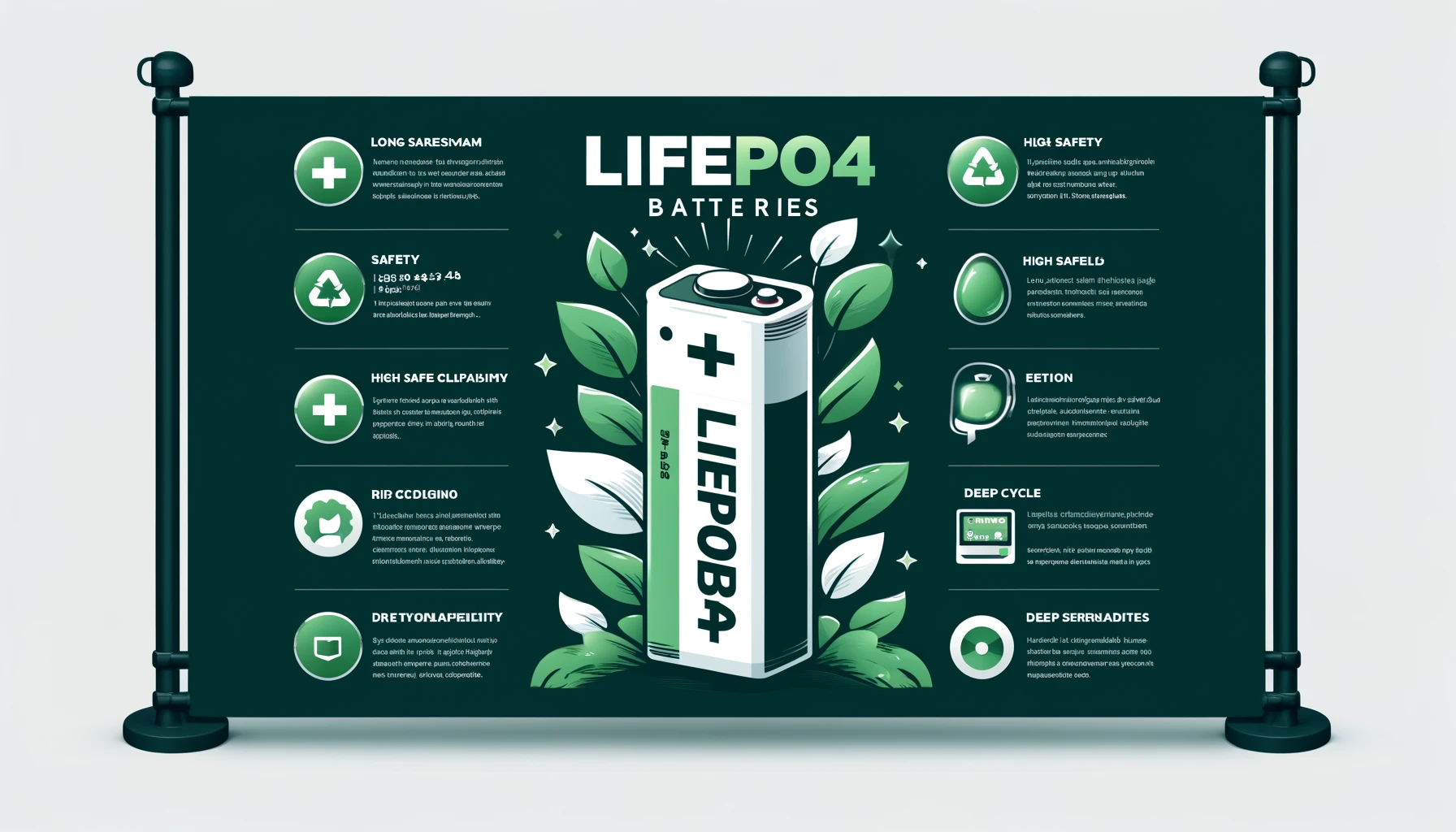
“LiFePO4 batteries are more eco-friendly, containing no cobalt, a controversial element due to the environmental and ethical issues associated with its mining.”
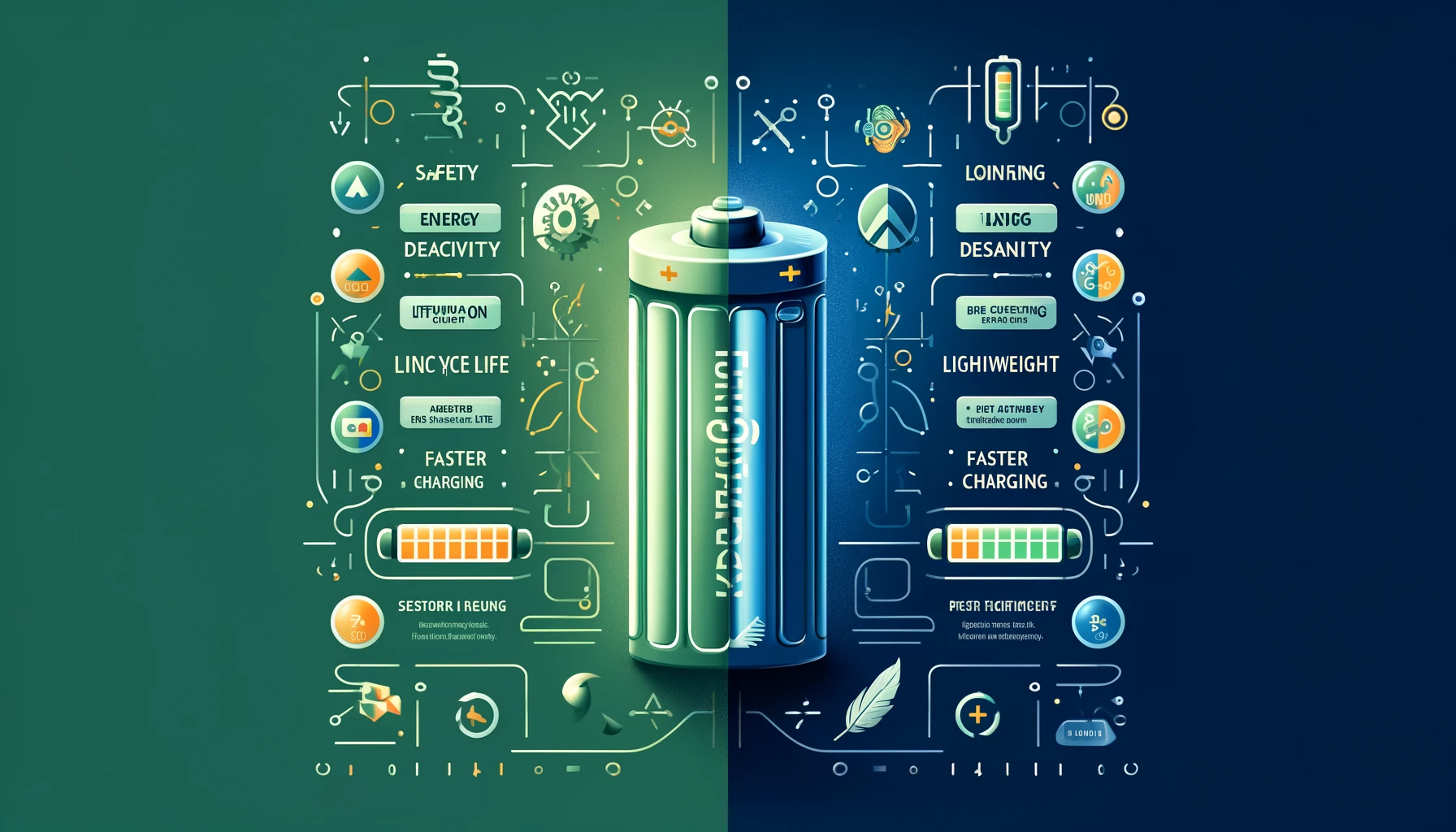
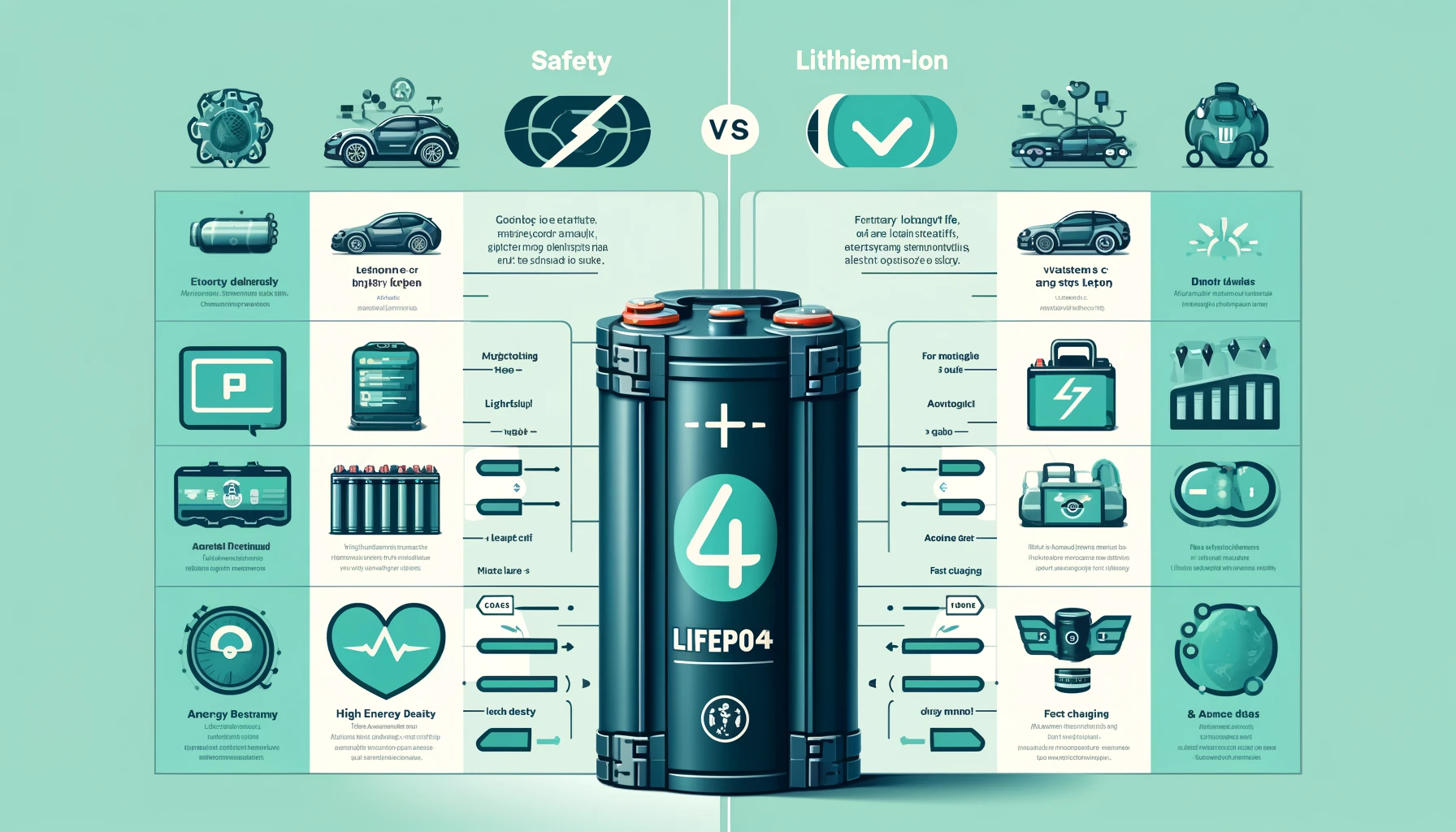
LIFEPO4 VS LITHIUM ION
In the evolving landscape of battery technology, the debate between LiFePO4 (lithium iron phosphate) and lithium-ion batteries remains a focal point for both consumers and industry professionals. This article delves into the distinctions between these two types of rechargeable batteries, focusing on aspects such as battery performance, energy density, battery safety, and environmental impact. Understanding these differences is crucial for making informed decisions, particularly in applications like electric vehicle batteries and portable energy solutions.
LiFePO4 batteries and Li-ion batteries serve similar functions but differ significantly in composition and performance. LiFePO4 is a type of lithium-ion battery that uses lithium iron phosphate as the cathode material, while Li-ion batteries often use lithium cobalt oxide or other materials like lithium manganese oxide.
LIFEPO4 Energy Density and Efficiency
Energy density is a critical factor in battery performance, indicating how much power a battery can store relative to its size. Lithium-ion batteries generally offer higher energy density compared to LiFePO4 batteries. This makes Li-ion batteries more suitable for applications where weight and space are significant concerns, such as in smartphones and laptops.
LiFePO4 batteries, on the other hand, while having lower energy density, compensate with other benefits such as stability and safety, which are pivotal for larger scale applications like electric vehicles and energy storage systems.
lifepo4 Cycle Life and Longevity
Cycle life, or the number of complete charge and discharge cycles a battery can handle before its capacity falls below a certain percentage of the original, is a vital aspect of battery efficiency. LiFePO4 batteries excel in this area, typically offering significantly longer cycle lives than traditional Li-ion batteries. This longer cycle life makes LiFePO4 an economically and environmentally better choice for systems where batteries are frequently charged and discharged, such as in solar energy storage.
The environmental impact of batteries encompasses their production, usage, and disposal. LiFePO4 batteries are often cited as a more environmentally friendly option than their Li-ion counterparts. They contain no cobalt, a controversial element due to the ecological and ethical issues associated with its mining. Additionally, the longer lifespan of LiFePO4 reduces the frequency of battery replacements, lessening waste and the associated environmental burden.
Ideal for applications requiring high safety, longevity, and robustness, such as:
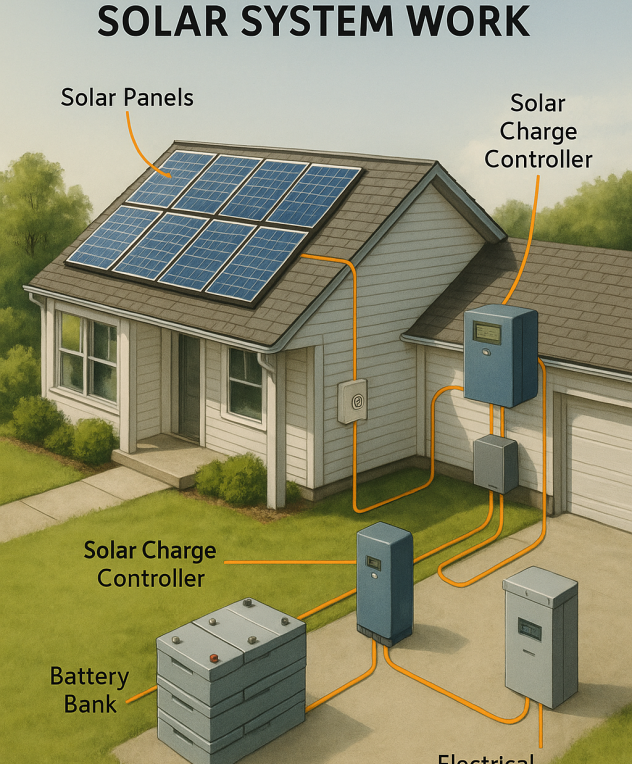
Solar energy storage systems
Electric vehicles (EVs)
Backup power supplies
Marine and RV batteries
Industrial applications
Lithium-Ion (LCO):
Preferred for applications where compact size and high energy density are crucial, such as:
Smartphones and laptops
Portable electronics
Drones
Lightweight electric vehicles like e-bikes and scooters
Conclusion
Both LifePO4 and traditional lithium-ion batteries have their unique strengths and optimal use cases. LifePO4 batteries excel in safety, lifespan, and environmental impact, making them ideal for high-demand and safety-critical applications. On the other hand, traditional lithium-ion batteries offer higher energy density and are more suited to portable electronic devices where space and weight are critical. Choosing the right type depends on the specific requirements of the application, balancing factors like energy needs, safety, cost, and environmental considerations.
Cost Considerations
While the initial cost of LiFePO4 batteries may be higher than some Li-ion batteries, the total cost of ownership over time can be lower due to their longer lifespan and reduced maintenance. For large-scale applications, particularly where safety and longevity are priorities, the investment in LiFePO4 can prove more economical in the long run.
The choice between LiFePO4 and Li-ion batteries depends significantly on the specific requirements of the application, including considerations like energy needs, safety requirements, environmental impact, and budget. While Li-ion batteries may be suitable for applications requiring high energy density and compact size, LiFePO4 batteries offer advantages in safety, longevity, and environmental sustainability, making them a compelling choice for larger, more critical applications.
Understanding these differences aids stakeholders in making informed decisions that align with both operational needs and sustainability goals, ensuring that the right battery.