LV and HV Voltage
Voltage Classifications
Electrical systems operate across different voltage ranges, with LV and HV being the most commonly referenced categories. Understanding the low voltage and high voltage distinction is essential for engineers, electricians, and businesses involved in power distribution. Additionally, medium voltage plays a crucial role in bridging the gap between these two classifications, while extra high voltage is used for specialized applications requiring long-distance transmission.
Electrical networks rely on various components such as LV systems, HV systems, and MV switchgear to regulate and distribute electricity safely and efficiently. This blog post will explore the Low voltage and High voltage difference, the role of medium voltage switchgear, and how high voltage switchgear is utilized in large-scale power applications.
Understanding Low Voltage (LV)
Low voltage (LV) refers to electrical systems operating at a relatively low potential difference. In most regions, LV is classified as electrical systems operating at voltages up to 1,000V AC or 1,500V DC. These systems are commonly found in residential, commercial, and smaller industrial applications where safety and ease of maintenance are key factors.
Common Applications of LV Systems
- Household electrical wiring (120V-240V AC)
- Office buildings and retail spaces
- Small industrial plants and workshops
- Lighting and HVAC systems
- Consumer electronics and appliances
LV systems offer simplicity and safety, making them ideal for applications that do not require high power transmission over long distances.
Exploring Medium Voltage (MV)
Medium voltage (MV) systems typically range between 1,000V AC (1kV) and 69kV. These voltages are used in industrial plants, commercial buildings, and localized power distribution networks. MV switchgear plays a critical role in controlling and protecting electrical circuits at these voltage levels.
Key Features of Medium Voltage Systems
- Used in electrical substations for power distribution
- Supports large manufacturing plants and industrial facilities
- Used in public transportation systems (trains, subways, and trams)
- Enhances reliability in commercial and institutional buildings
What is High Voltage (HV)?
High voltage (HV) refers to electrical systems operating at voltages above 69kV, typically used in power transmission and large-scale industrial operations. High voltage switchgear ensures the safe control and distribution of electricity in these environments.
Applications of HV Systems
- Power transmission from generation stations to substations
- Large industrial operations, such as mining and steel production
- Power grids for cities and large communities
- Renewable energy farms (solar and wind power transmission)
Understanding Extra High Voltage (EHV)
Extra high voltage (EHV) systems operate at voltages above 230kV, often extending to 800kV or more. These systems are crucial for long-distance power transmission and reducing energy losses over extended networks.
Where is Extra High Voltage Used?
- Cross-country power transmission
- High-capacity electrical substations
- Interconnecting national or regional power grids
- Ultra-large industrial applications requiring substantial energy supply
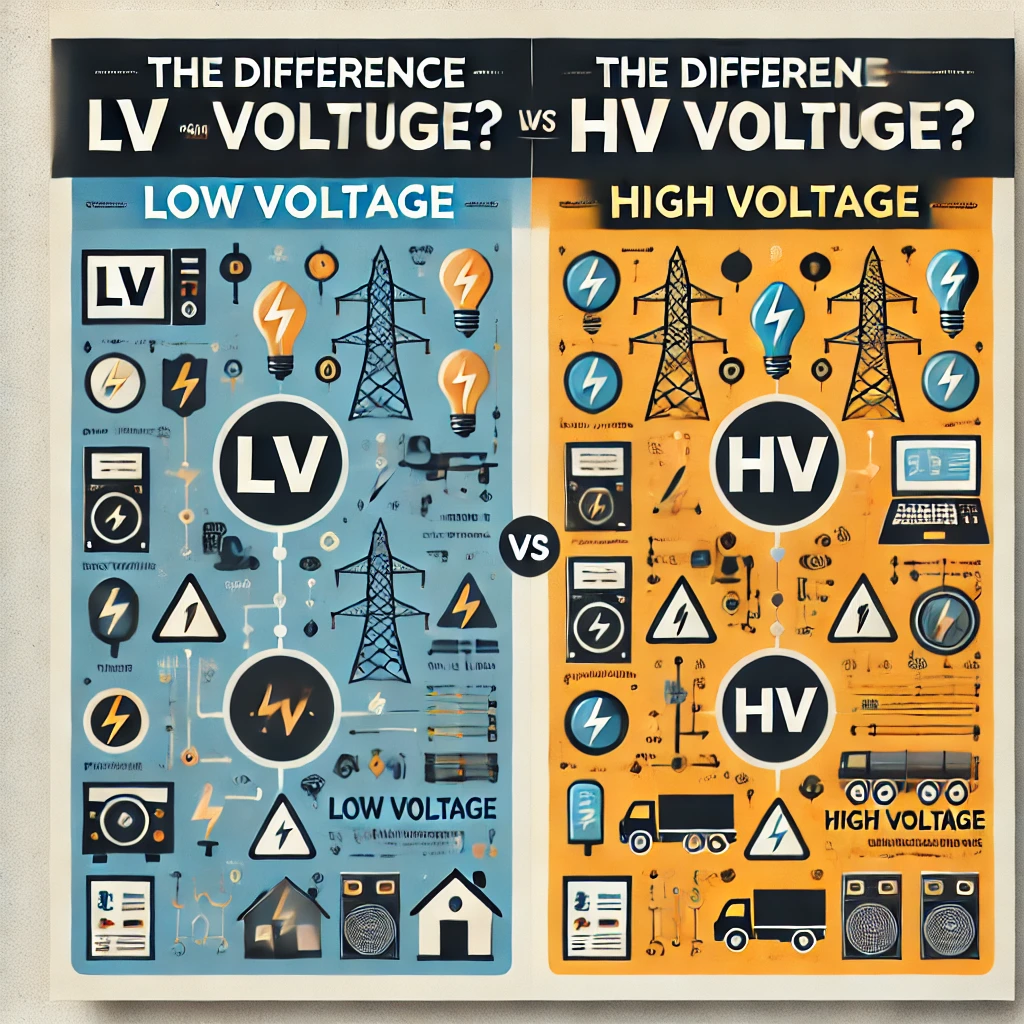
LV and HV Difference Explained
The LV and HV difference can be summarized by comparing their key characteristics:
Feature | Low Voltage (LV) | High Voltage (HV) |
Voltage Range | Up to 1,000V AC | Above 69kV |
Common Usage | Homes, offices, small industries | Power transmission, heavy industry |
Safety Risk | Low | High due to electrical arcing |
Equipment Used | LV systems, wiring, basic circuit breakers | HV systems, transformers, high voltage switchgear |
Energy Losses | Higher over long distances | Lower due to efficient transmission |
The Role of Switchgear in LV and HV Systems
Both low voltage and high voltage electrical networks require protection, control, and switching mechanisms. This is where switchgear comes in, ensuring efficient power distribution and preventing faults.
LV Systems and Low Voltage Switchgear
- Handles voltages up to 1,000V.
- Used in commercial buildings and small industries.
- Protects electrical circuits from overload and short circuits.
MV Switchgear for Medium Voltage Networks
- Operates between 1kV and 69kV.
- Installed in substations and industrial plants.
- Enhances power reliability by managing circuit interruptions.
High Voltage Switchgear for Transmission Networks
- Used in networks above 69kV.
- Ensures efficient operation of power grids.
- Contains circuit breakers, disconnectors, and surge arresters.
Choosing the Right Voltage for Your Application
Selecting between LV, MV, and HV depends on the intended application:
- LV systems are best for residential, small-scale commercial, and industrial setups.
- Medium voltage networks support large commercial buildings, data centers, and factories.
- HV systems are necessary for large-scale industrial operations and national power transmission.
Understanding Voltage Classifications for Better Energy Management
Recognizing the distinctions between LV and HV, as well as the role of medium voltage switchgear and high voltage switchgear, is crucial for efficient energy management. Whether designing a residential electrical system, managing an industrial facility, or operating a power grid, choosing the right voltage level ensures safe, reliable, and cost-effective power distribution.
By leveraging the right combination of low voltage and high voltage systems, businesses and utility providers can optimize energy transmission while ensuring safety and efficiency across electrical networks