

Description
CONTAINERIZED STORAGE WITH LIFEPO4 BATTERY
Discover Sustainable Power Solutions with Containerized Storage
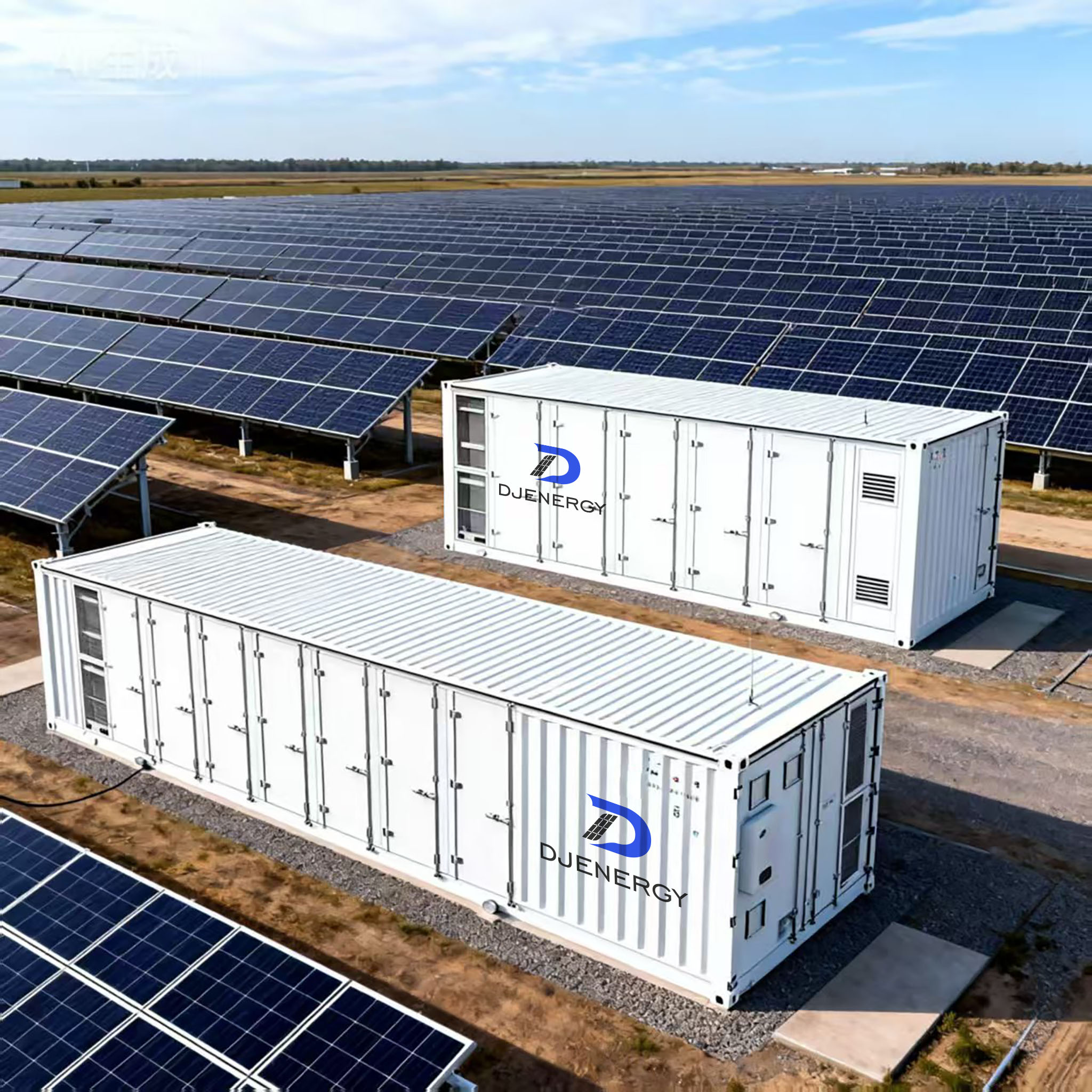
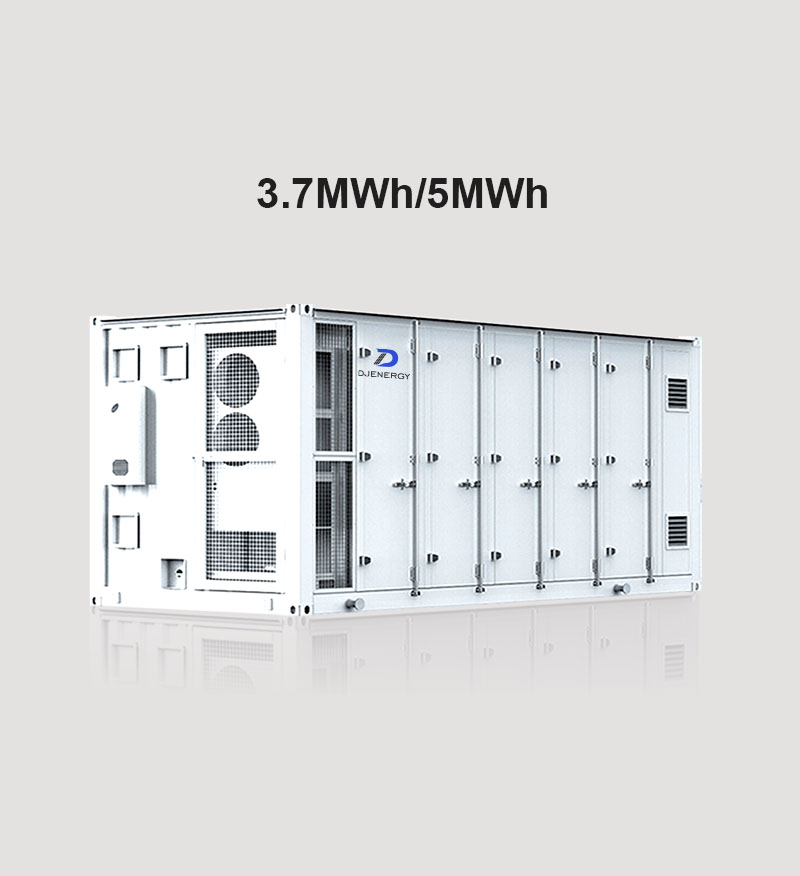
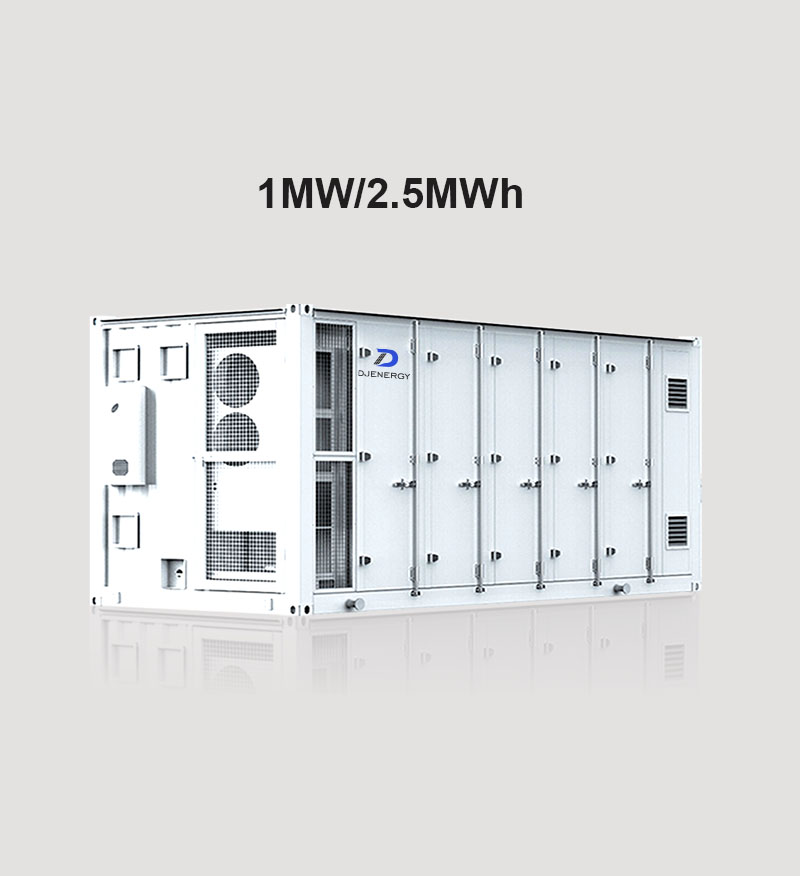
DJENERGY Containerized Energy Storage System (LFP) is a factory-integrated BESS packaged in an ISO container. It combines battery racks, PCS, BMS/EMS interfaces, thermal management and safety monitoring for fast deployment on commercial & industrial sites, solar + storage plants and microgrids.
This page describes a configurable platform. Final configuration depends on project power/energy requirements and destination standards.
| 1MW/2.5MWH Energy Storage System | ||||
| Rated output power | 1000KW | |||
| Rated capacity | 2500KWH | |||
| AC Phases | Three-phase Four-wire | |||
| Grid discharge mode | Rated voltage | 380V | ||
| Voltage range | 380±15%V | |||
| Rated frequency | 50Hz | |||
| Frequency range | 47.5~51.5Hz | |||
| Total current waveform | <5% | |||
| distortion rate(THD) | ||||
| Output power factor | ≥0.99 | |||
| Isolated network operation mode | Rated voltage | 380V | ||
| Voltage accuracy | <±3% | |||
| Output voltage distortion | <5% | |||
| Rated output frequency | 50±2%Hz | |||
| Voltage transition range | <10% | |||
| Can withstand three – phase load imbalance | 100% | |||
| Grid-connected charging operation mode | Rated voltage | 400V | ||
| Voltage range is allowed | 380±15%V | |||
| Frequency range | 47.5~51.5HZ | |||
| Power factor | ≥0.99(absolute value) | |||
| Noise | <70dB | |||
| IP GRADE | IP54 | |||
| External communication | Ethernet | |||
| Dimension | 12192mm(L)*2438mm( W)*2591mm(H) | |||
| Weight | 22 Ton | |||
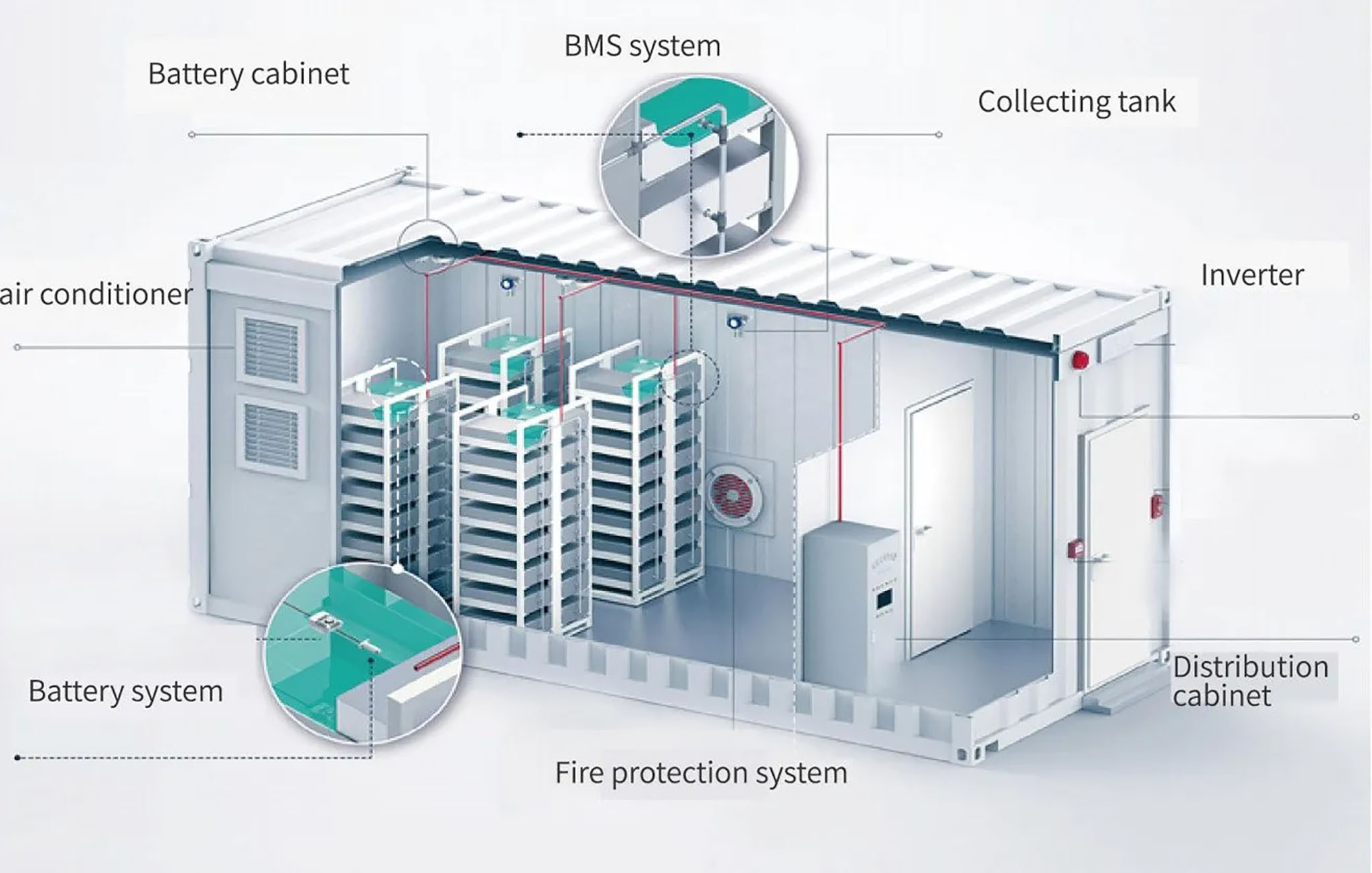
System Architecture
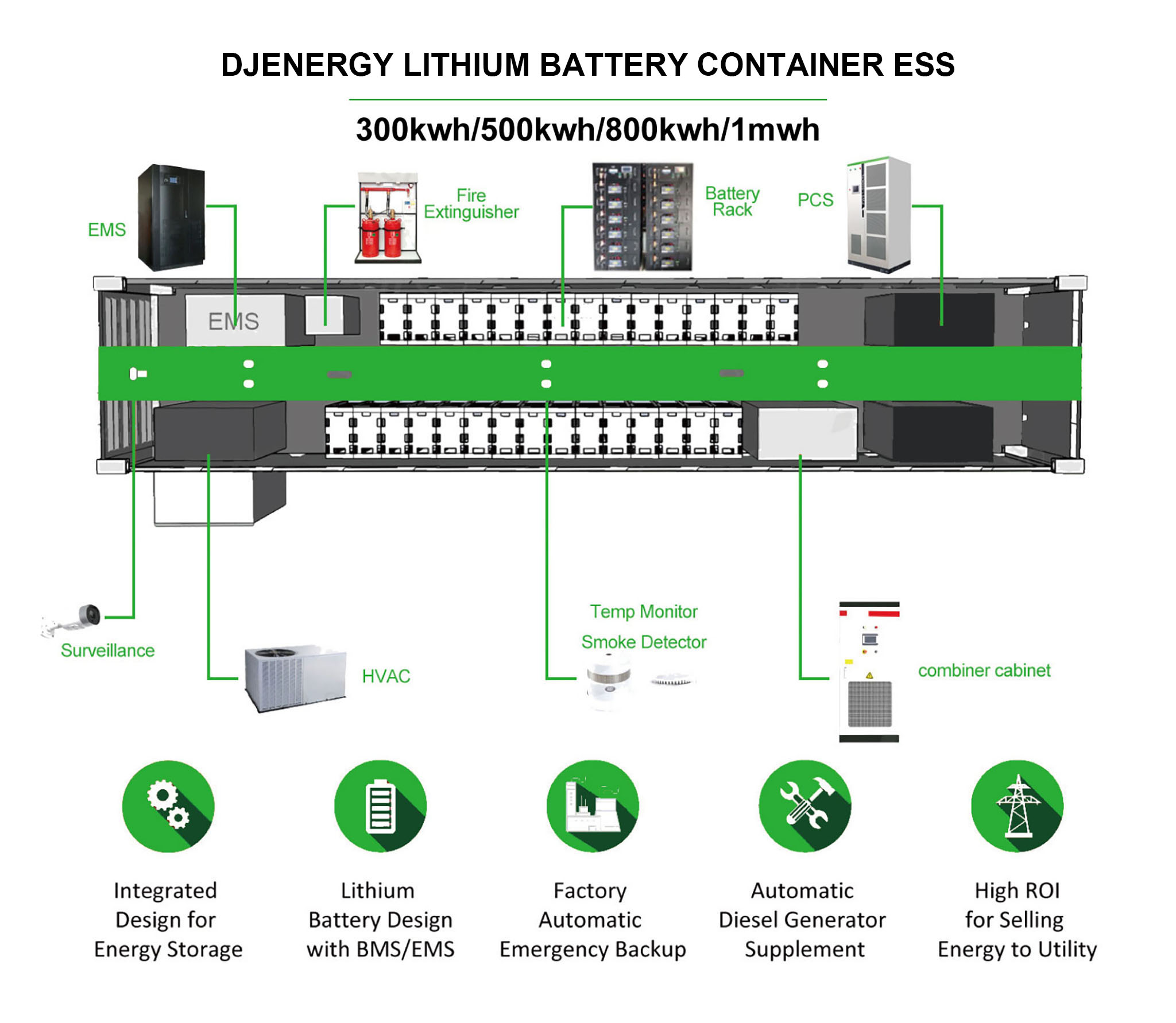
A typical containerized BESS includes:
– PCS (bidirectional inverter) for grid interface and charge/discharge control
– LFP battery racks with multi-level BMS protection (cell/module/rack)
– EMS interface for scheduling, peak shaving logic, PV coordination and export control
– Thermal management (liquid loop / chiller or HVAC)
– Monitoring & safety interlocks (temperature/smoke sensors, alarms, E-stop)
– AC/DC distribution, auxiliaries, service lighting and maintenance access
Applications
- Peak Shaving & Demand Charge Reduction
Discharge during high-load periods to reduce demand charges and stabilize electricity costs. - PV Integration & Output Smoothing
Store PV surplus and respond to ramps to improve PV utilization and reduce curtailment. - Backup Power for Critical Loads
Provide stored energy during outages. Fast transfer solutions (ATS/STS/UPS architectures) can be integrated depending on site requirements. - Microgrid & Hybrid Power (PV + Diesel + BESS)
Coordinate with PV and diesel generators to reduce fuel consumption and improve voltage/frequency stability. - Zero Export / Export Limitation (Optional)
Meter/CT feedback and EMS/PCS control can maintain 0 kW export or a configurable export cap (subject to site requirements).
Safety & Reliability
Safety is designed at multiple levels and finalized per project:
– Multi-level BMS protections and fault isolation
– Thermal monitoring and controlled derating strategies
– Safety interlocks and emergency stop
– Fire detection and suppression options (project-configurable)
– Commissioning checklist and alarm mapping for operation and maintenance
Delivery Scope
Factory assembly and functional test (FAT)
– Electrical drawings, interface list and commissioning checklist
– Remote monitoring / EMS integration support (optional)
– Spare parts and O&M support (optional)
RFQ Checklist (To Get an Accurate Quote)
Please share:
– Grid voltage/frequency (e.g., 400V/50Hz or 480V/60Hz)
– Required power (kW/MW) and energy (kWh/MWh)
– Operating mode (peak shaving / backup / PV smoothing / microgrid / zero export)
– Load profile or peak demand, and PV size/inverter details (if any)
– Diesel genset rating (if any)
– Installation location, ambient temperature range, altitude
– Required standards / destination country
– Delivery terms (EXW/FOB/CIF) and destination port
FAQs
1.What is the difference between an all-in-one cabinet and a containerized BESS?
All-in-one cabinets fit most C&I sites for fast installation. Containerized BESS is suitable for larger power/energy and station-level architectures.
2.Can you integrate with EMS / SCADA?
Yes. Standard interfaces support Modbus/Ethernet/CAN for EMS/SCADA integration and remote monitoring.
3.Do you support PV + grid + diesel hybrid operation?
Yes. Control strategies can coordinate PV, gensets and BESS through EMS/PCS logic depending on site design.
4.What battery chemistry do you use?
Standard configuration uses LiFePO4 (LFP) for safety and cycle life.
Compliance note
Certification and grid-code compliance depend on project configuration and destination requirements. Relevant documents can be provided upon request.
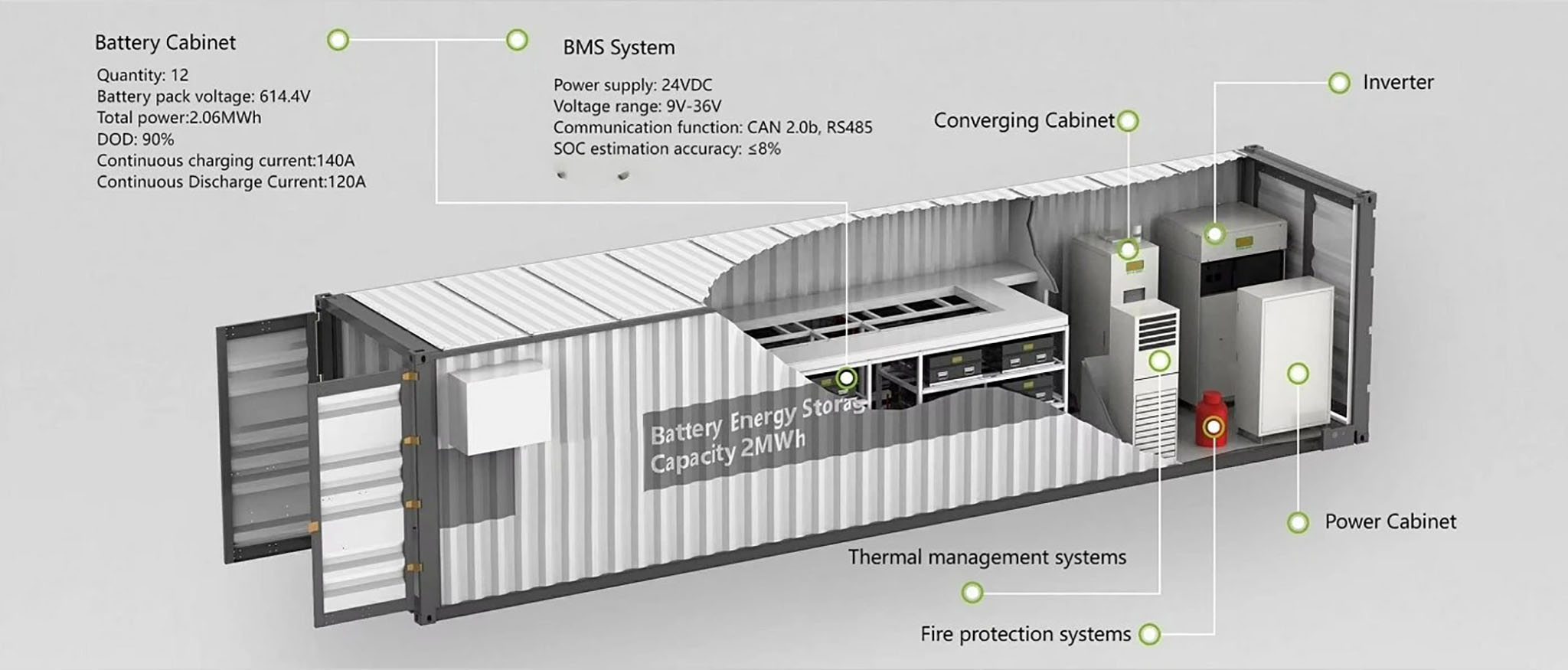
Key features of the solution include:
Modular Design: The plug-and-play commissioning and maintenance capabilities of each battery cabinet indicate a user-friendly and convenient installation process. This modular approach could help streamline setup and reduce downtime during maintenance.
Environmental Control: The environmentally controlled liquid-cooled cabinet helps maintain optimal operating conditions for the battery cells. This is crucial for extending the lifespan and ensuring consistent performance of the energy storage system.
IP56 Construction: The IP56 construction of the outdoor cabinet indicates a high level of protection against dust and water ingress. This robust design is essential for ensuring the durability and longevity of the system, especially in outdoor or challenging environments.
Fire Suppression: The inclusion of fire suppression within the cabinet demonstrates a safety-conscious approach to the design, which is critical for large-scale energy storage systems to prevent potential hazards.
Scalability: The ability to install multiple cabinets together, creating energy storage blocks with capacities of up to 4472kWh, showcases scalability. This flexibility allows for customization based on the specific energy storage requirements of different projects.
Wide Range of System Sizes: The solution’s compatibility with energy storage systems ranging from 1MWh to 100MWh+ indicates versatility, enabling it to address a variety of applications and project scales.
Advantages of the system:
Reduce electricity cost: Multi-scene application, support peak, and valley arbitrage, auxiliary services, etc. Reduce electricity cost.
Improve system efficiency: intelligent algorithms improve system efficiency, Stable battery cell temperature, sensor technology, and big data support.
Smart and friendly: Grid-friendly, proactive support, quick response; Algorithm intelligence, efficient operation, prolonged service life; Access-friendly, diverse, and flexible.
High reliability: Comprehensive cloud monitoring, fast fault diagnosis; Intelligent management, AI support, improved thermal management capabilities; Fault isolation, multi-level protection, coordination of components and systems.
Flexible and convenient: Modular design, easy to install and maintain; Good compatibility, capacity can be expanded on demand; Support multiple sets of parallel use with a wide range of capacity.